Calmer Evenings Start Here — A Practical Sleep Routine Guide for Parents Who Are Done Guessing

When bedtime starts controlling the whole house, even small nights can feel too heavy.
You already know the pattern.
Evening comes. You tell yourself tonight will be different. You feed the baby, change the diaper, dim the light, rock gently, sing softly, and watch the clock with one eye.
The baby closes their eyes for a few minutes.
You slowly adjust your hand.
You try to place them down.
Then the eyes open again.
Omo.
Your chest tightens because you already know what may follow. The crying may start again. The rocking may start again. The feeding may start again. The walking from one side of the room to the other may start again.
And somewhere inside your mind, a quiet thought comes up.
Why is bedtime this hard?
You love your baby deeply. That is not the question. But love does not remove the tiredness from your body when you have carried a baby for forty minutes and the moment you sit down, the crying starts.
Love does not make it easy when you have work the next morning, house chores waiting, messages unanswered, and a body that has not had proper rest in days.
You may have tried different ideas already.
You tried rocking longer.
You tried feeding again.
You tried letting the baby sleep on your chest.
You tried keeping the room brighter.
You tried making the room darker.
You tried waiting until the baby was very tired, only to discover that a very tired baby can become even harder to settle.
Maybe you have searched online for baby sleep advice and came out more confused than before. One person says babies should sleep at a certain time. Another says babies should not be held too much. Another says crying is normal. Another says never allow crying. Someone in a mummy group gives one opinion. Your mother gives another. A friend says her own baby sleeps easily, and even though she means well, it makes you feel like you are doing something wrong.
So you keep trying.
Some nights, the baby settles quickly and you feel hopeful. Other nights, bedtime stretches so long that your whole evening disappears inside one cycle of feeding, rocking, crying, carrying, and starting again.
That is what makes it painful.
It is not only the sleep.
It is the uncertainty.
You do not know whether tonight will be calm or stressful. You do not know whether the baby will sleep for a useful stretch or wake again just as you are about to close your eyes. You do not know whether you should change the nap, change the feeding time, change the room, change the routine, or simply endure it.
And when people say, "It is normal, babies don't sleep," it may be partly true, but it does not help you at 1:27am when you are standing in a dark room with a baby who refuses to settle.
You do not need judgment.
You do not need another confusing theory.
You need a simple, gentle, step-by-step routine you can follow every evening, so bedtime stops feeling like trial and error.
You need to understand what should happen before bedtime, what to do during bedtime, what to avoid when the baby is already overtired, and how to create a calmer rhythm without harsh methods or unrealistic promises.
This is where many parents make the same mistake. They focus only on the moment the baby is crying at night. But night sleep is usually shaped by what happened earlier in the day, the evening rhythm, the way the baby winds down, the room cues, the feeding flow, and how consistently the same sleep signals appear.
Once you see bedtime as a routine instead of a battle, everything begins to feel less random.
Not perfect.
Not magic.
But calmer, more predictable, and easier to manage.
That is why this guide was created for parents who are tired of guessing and want a practical bedtime structure they can use at home, even in a busy Nigerian household where generators, siblings, visitors, heat, noise, and late evening activity can make baby sleep more difficult.
Keep reading. What you are about to see is not a harsh sleep training promise. It is a gentle routine-based approach created to help parents reduce bedtime chaos and build healthier night-time habits one small step at a time.

The problem usually starts before the crying begins.
For many parents, baby bedtime becomes difficult gradually.
At first, the baby is small and everyone expects broken sleep. People say, "Newborn stage is like that." So you adjust. You feed often. You carry often. You wake often. You do what you need to do.
Then the baby grows older, but the night pattern does not improve the way you expected.
The baby may be four months, six months, eight months, ten months, or even older, yet bedtime still feels unpredictable. Some evenings are manageable. Some evenings feel like a full-time job after you have already worked all day.
This is where confusion enters.
You start asking questions.
Is the baby hungry?
Is the baby too hot?
Is the baby teething?
Did the baby nap too much?
Did the baby not nap enough?
Am I carrying too much?
Am I not carrying enough?
Because there is no clear plan, every night becomes a fresh experiment.
One evening, you let the baby stay awake longer because you think more tiredness will lead to deeper sleep. Instead, the baby becomes fussy, restless, and difficult to calm.
Another evening, you rush bedtime too early and the baby treats it like another nap.
Another time, you feed right before sleep and the baby dozes off quickly, so you repeat it again and again. Soon, the baby begins to expect that exact feeding pattern every time they wake.
Then you try reducing the feeding-to-sleep habit and it feels like the whole night has scattered.
This is not because you are a bad parent.
It is because no one gave you a clear bedtime system.
Most baby sleep advice gives parents fragments. One tip about naps. One tip about room temperature. One tip about feeding. One tip about white noise. One tip about bedtime. But parents are not shown how those pieces connect.
So they collect advice, try it randomly, and feel worse when one tip does not solve everything.
That is the real gap.
Parents do not need more scattered baby sleep tips. They need a gentle sequence that shows what to do before bedtime, during bedtime, after the baby wakes, and how to repeat the right signals calmly until the baby starts recognising the rhythm.
The Calm Nights approach is built around that missing sequence.
It treats baby sleep as a pattern. It does not shame the parent. It does not promise that every baby will sleep through the night immediately. It does not ask you to copy a foreign routine that ignores how many African homes actually run in the evening.
It starts with the real home.
The baby may sleep in your room. There may be siblings. There may be noise from outside. There may be heat. There may be power interruptions. There may be family members who keep turning on bright lights or speaking loudly around bedtime. There may be visitors who want to carry the baby at the exact time the baby should be winding down.
If the guide ignores these realities, it will not help enough.
So the method begins by helping you build a calm evening flow that fits normal life, not a perfect Instagram nursery.
It shows you how to read tired signs earlier, how to prepare the room, how to use repeated sleep cues, how to separate feeding from the final sleeping moment when appropriate, how to reduce overstimulation, and how to respond when the baby wakes without turning every wake-up into a full reset.

The turning point is often not dramatic.
It may be as simple as realising that your baby has been going to bed too late.
It may be discovering that the evening play is too active.
It may be noticing that the baby cries more when the room changes suddenly from noisy and bright to dark and silent.
It may be learning that the bedtime routine should begin before the baby is already exhausted.
Small changes matter because babies learn through repetition.
When the same gentle cues appear in the same order night after night, the baby begins to understand what is coming. The body starts preparing. The mind becomes less alert. The parent also becomes calmer because there is a plan to follow.
This is the moment many parents need most.
Not another person saying, "Just be patient."
Not another online comment making them feel careless.
Not a strict routine that creates more anxiety.
They need a calm structure that says, "Here is what to do next."
That structure is what this PDF guide gives.
It helps you move from random bedtime reactions to a repeatable routine.
It helps you understand why your baby may fight sleep even when tired.
It helps you prepare the evening before the crying becomes intense.
It helps you create a night-time rhythm that your baby can begin to recognise.
It helps you stop feeling like every night is a fresh exam you did not study for.
The full bedtime routine has now been packaged into a simple PDF guide you can start using tonight.
The product is called The Calm Nights Baby Sleep Guide: A Gentle Step-by-Step Routine for Turning Chaotic Bedtimes into Peaceful Nights.
It was created for parents who want practical help, not pressure. You get a clear evening routine, simple sleep cues, nap and night guidance, common mistake warnings, and calm response steps for those nights when your baby still wakes and you need to know what to do next.
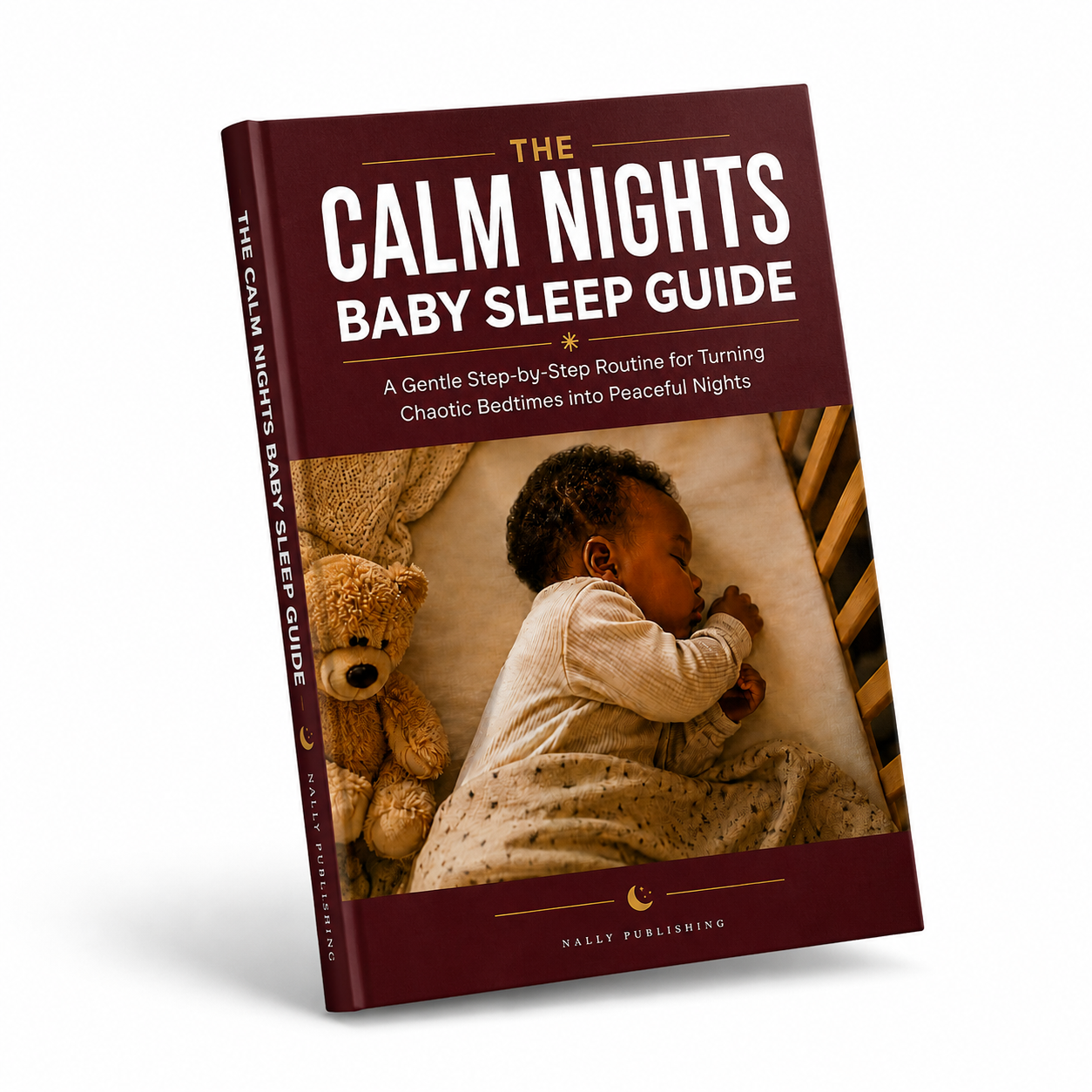
Instant digital guide. Read on your phone, tablet, or laptop after purchase.
Secure payment via Nestuge. Instant access after successful payment.
Everything is arranged so you can stop guessing and follow the routine step by step.
The Calm Nights Foundation
This section helps you understand why bedtime becomes chaotic in the first place. It explains the link between daytime rhythm, evening stimulation, tired signs, feeding habits, room cues, and night waking. Instead of blaming yourself, you will see the pattern behind the struggle and know which part of the routine needs attention first.
Reading Your Baby's Sleep Signals
This section shows you how to spot the difference between early tired signs and late overtired signs. Many parents wait until the baby is already crying, rubbing eyes aggressively, arching the back, or becoming restless before starting bedtime. You will learn how to begin the wind-down earlier, when your baby is easier to settle.
The Evening Wind-Down Routine
This is the main step-by-step routine. It shows what to do in the final stretch before bedtime, including how to reduce noise, soften light, manage feeding, choose calming activities, and repeat the same sleep cues in a way your baby can begin to recognise. The goal is to make bedtime feel predictable instead of rushed.
Room Setup for Nigerian Homes
This section addresses real home conditions that many foreign baby sleep guides ignore. It covers light, heat, generator noise, siblings, visitors, shared rooms, mosquitoes, and evening household activity. You will learn how to create calmer sleep cues even when your home is not perfectly quiet or fully air-conditioned.
What to Do When Your Baby Wakes
This section gives you a calm response plan for night waking. Instead of switching between feeding, carrying, rocking, bright lights, and full playtime, you will know how to check the common causes and respond in a way that supports sleep without turning every wake-up into another long bedtime.
Common Bedtime Mistakes
This section helps you identify the small habits that may be making nights harder. It covers late bedtimes, overstimulation, inconsistent cues, using too many methods at once, waiting until the baby is overtired, and changing the routine too quickly. Once you see these mistakes clearly, you can adjust without panic.
Your 7-Night Calm Bedtime Plan
This final section gives you a simple plan to follow for one week. Each night has a clear focus, so you are not trying to change everything at once. You will know what to observe, what to repeat, what to adjust, and how to keep the routine gentle while still building healthier night-time habits.
Secure payment via Nestuge. Instant access after successful payment.
The Calm Nights method works because it treats bedtime as a connected routine, not a single trick.
Most parents are given isolated advice. Feed more. Feed less. Rock longer. Stop rocking. Change the room. Change the nap. Use music. Stop music. Try this. Try that.
The problem is that a baby does not experience bedtime as isolated tips. A baby experiences rhythm, timing, comfort, repetition, cues, and response.
That is why The Calm Nights Baby Sleep Guide uses a simple four-part routine. First, you notice the baby's tired window before overtired crying begins. Next, you reduce stimulation gradually so the baby is not moving from loud activity to sudden darkness. Then you repeat the same calm cues in the same order, so bedtime becomes familiar. After that, you respond to night waking with a clear check-and-calm process instead of starting the whole night again.
This is the market gap the guide fills. Parents do not need another long lecture about baby sleep. They need a practical system that connects daytime rhythm, evening wind-down, room setup, feeding flow, and night response in one simple plan.
When the routine becomes consistent, the baby starts receiving clearer signals. The parent also becomes less tense because there is a plan to follow. That combination can turn bedtime from a confusing nightly struggle into a calmer household rhythm.
This is for the parent who wants a calmer bedtime plan, not more scattered advice.
Most baby sleep content gives parents too many opinions and not enough structure. One person says to feed. Another says to stop feeding. One says to rock. Another says never to rock. One says bedtime should be early. Another says the baby will sleep when tired.
That kind of advice can leave you more confused than before, especially when you are already tired and your baby is crying at night.
The Calm Nights Baby Sleep Guide was created to give you a simple bedtime sequence you can follow without panic. It helps you understand what to do before bedtime, how to reduce evening stimulation, how to create repeated sleep cues, and how to respond when your baby wakes without turning the whole night into another long struggle.
It is not built around harsh promises. It is built around practical routines, gentle repetition, and calmer decision-making for parents who want more structure at night.
Important note before you buy
This guide is for routine-building and parent education. It is not a medical guide, and it does not claim to treat sleep disorders or health conditions. If your baby's crying, waking, feeding, breathing, weight, reflux, allergy symptoms, fever, or general health concerns you, speak with a qualified health professional before using any sleep routine.
Start building a calmer bedtime routine today.
This guide was created to give you a practical plan you can read on your phone and start applying from tonight.
You are not paying ₦7,500.
Today, you pay just:
You save ₦2,500 today.
That is less than what many parents spend on one quick supermarket run, one small baby item, or a few rides across town. But this guide can stay with you every night as you build a calmer bedtime routine.
Secure payment via Nestuge. Instant access after successful payment.
WAIT, I Have FREE Gifts For You.
When you get The Calm Nights Baby Sleep Guide today, you also receive two simple bonuses that help you apply the routine faster.
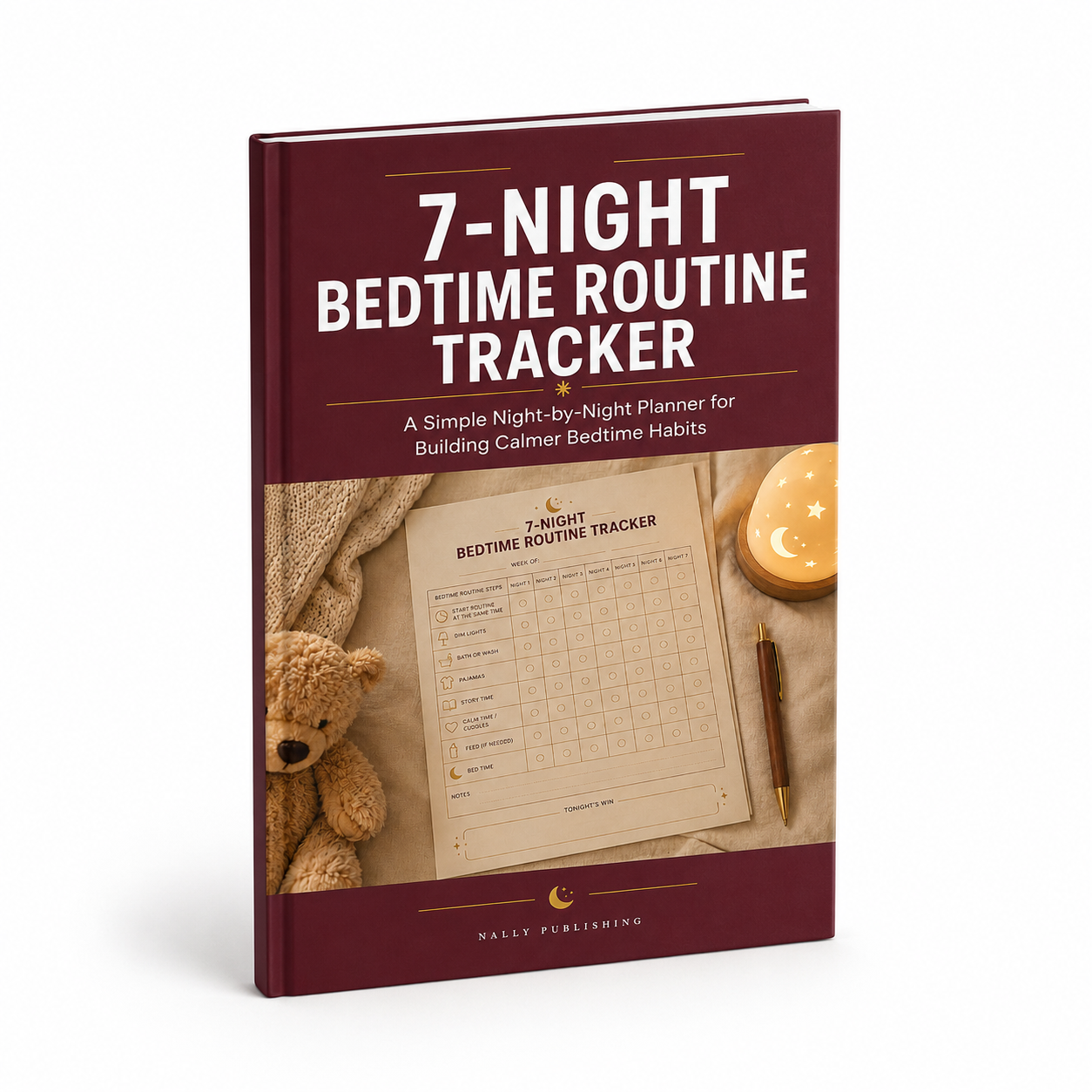
7-Night Bedtime Routine Tracker
A simple tracker that helps you record bedtime, naps, wake-ups, and what changed each night, so you stop relying on memory.
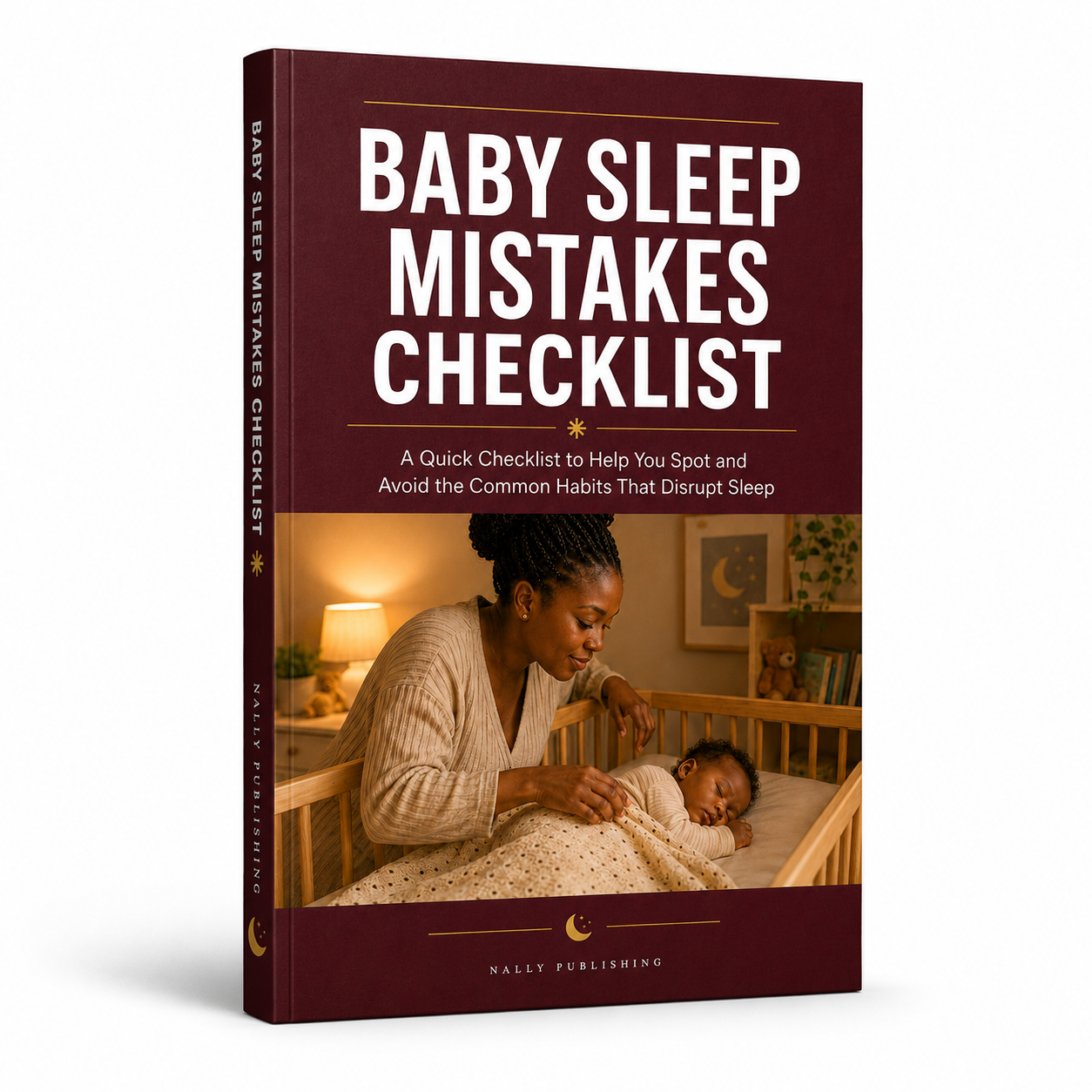
Baby Sleep Mistakes Checklist
A quick checklist that helps you spot common bedtime mistakes such as overtiredness, late stimulation, and inconsistent sleep cues.
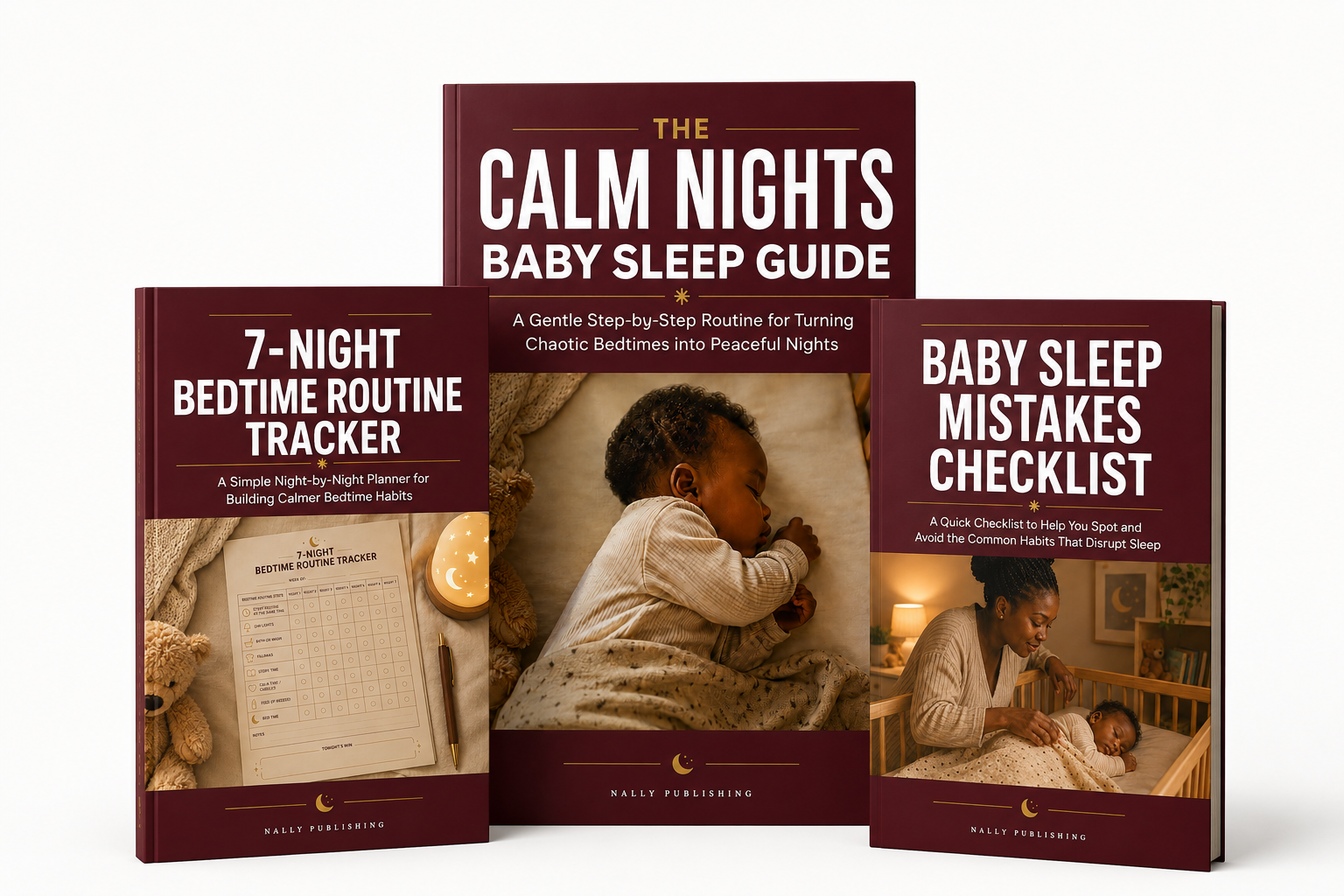
Instant access after payment through Nestuge.
This guide is a good fit if bedtime has started feeling unpredictable.
This is for you if
Your baby struggles to settle easily at bedtime.
You feel unsure whether the issue is feeding, naps, timing, room setup, or routine.
You want a gentle approach without harsh sleep methods.
You need something simple enough to follow even when you are tired.
You want calmer evenings and more predictable night-time habits.
This may not be for you if
You are looking for a medical solution to a health concern.
You want a guaranteed overnight result.
You do not want to repeat a routine consistently.
You prefer random tips instead of a step-by-step plan.
Your baby has symptoms that need a doctor's attention first.
Simple Money-Back Guarantee
If you go through this guide and feel it was not worth every naira, contact me for a full refund.
No drama. No long argument. The goal is to help you feel more confident with bedtime, not make you regret buying.
FAQ
You receive instant email delivery after payment. You can open the PDF on your phone, tablet, or laptop.
You are protected by the guarantee. If you go through the guide and feel it was not worth every naira, contact me for a full refund.
Yes. Payment is processed securely through Nestuge.
No. This guide focuses on gentle bedtime routines, calmer evening cues, and practical structure. It does not ask you to leave your baby to cry or promise an overnight result.
Yes. The routine is designed to work in real homes, including shared rooms and homes with normal evening noise, siblings, visitors, heat, or power interruptions.
No. You do not need expensive sleep gadgets. The guide shows you how to use simple changes like timing, light, noise reduction, repeated cues, and a clearer bedtime sequence.
You can start the same night you receive the guide. Begin with the quick starter routine, then use the full 7-night plan to build consistency one step at a time.
No honest baby sleep guide can promise that every baby will sleep through the night immediately. This guide helps you build a calmer, more consistent bedtime routine so nights can become more predictable over time.
Yes. The guide does not ask you to ignore genuine feeding needs. It helps you understand how feeding can fit into a calmer bedtime sequence and how to respond to night waking with more structure.
You receive the 7-Night Bedtime Routine Tracker and the Baby Sleep Mistakes Checklist, so you can apply the routine more easily and spot habits that may be making bedtime harder.
If your baby has breathing concerns, reflux, allergies, poor weight gain, fever, unusual crying, or any health issue that worries you, speak with a qualified health professional first. This guide is for routine-building and parent education, not medical treatment.
You can keep guessing, or you can follow a calm bedtime plan.
When you get the guide today
You know how to start bedtime before your baby becomes overtired.
You follow a clear evening routine instead of trying random tips.
You create sleep cues your baby can begin to recognise.
You respond to night waking with more calm and less panic.
You feel more confident because there is a plan in your hand.
When you leave without it
Tonight may still feel like another guessing game.
You may keep changing too many things at once.
You may keep waiting until the baby is already overtired.
You may keep depending on scattered advice from different people.
You may keep feeling unsure about what to do next when the crying starts.
One guide will not make parenting effortless. Nothing honest can promise that. But the right guide can remove confusion, give you a routine, and help you approach bedtime with more calm than you had yesterday.
For ₦5,000, you can stop piecing together random advice and start following a gentle step-by-step plan tonight.
Secure payment through Nestuge. Instant access after successful payment.